
Sinais de uma bateria de automóvel avariada - O guia de diagnóstico completo (não apenas uma lista de sintomas)
A maioria dos artigos online sobre um mau bateria de automóvel basta enumerar os sintomas: arranque lento, luzes fracas, ruído de clique, corrosão.
Mas eis o problema:
👉 Nem todos os problemas elétricos se devem a uma bateria defeituosa.
👉 Nem todos os sintomas têm a mesma urgência.
👉 O ambiente e os hábitos de condução influenciam significativamente a forma como os sintomas se manifestam.
👉 Poucos guias explicam como confirmar cientificamente se a bateria está realmente a falhar.
Este guia vai além das simples listas de verificação. Ensina-lhe como diagnosticar corretamente, classificar os sintomas por gravidade e tomar decisões de substituição com base em dados.
1. O passo mais importante: o diagnóstico diferencial
Será mesmo a bateria — ou outro sistema?
Antes de substituir qualquer coisa, compreenda o sistema:
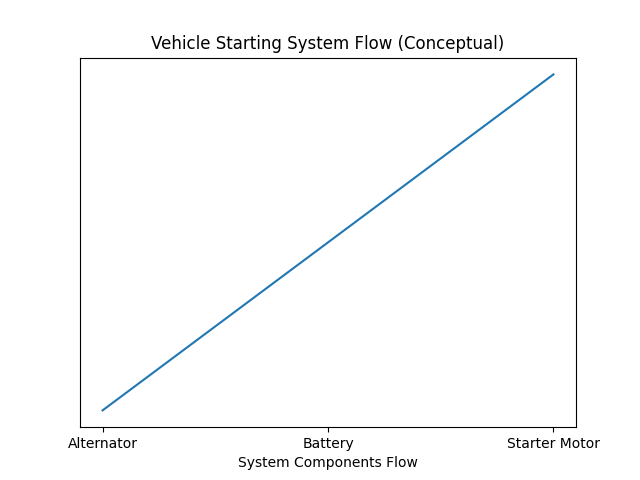
Bateria = reservatório de armazenamento de energia
Alternador = carregador
Motor de arranque = consumidor de alta corrente
Cablagem e ligações à terra = condutas
Pode ocorrer um problema em qualquer ponto desta cadeia.
Filosofia do Diagnóstico Rápido
Os problemas com a bateria surgem normalmente quando o motor está desligado ou no momento do arranque.
Se os problemas elétricos persistirem depois de o motor estar a funcionar, suspeite primeiro do alternador ou da cablagem.
Tabela de diagnóstico diferencial baseada nos sintomas
| Sintoma | Possível problema com a bateria (como verificar) | Outras causas possíveis (como descartar) |
|---|---|---|
| Arranque lento ou fraco | A bateria não consegue fornecer uma corrente elevada de forma sustentada. Teste: acenda os faróis ou toque a buzina durante vários minutos (com o motor desligado) e, em seguida, tente ligar o motor. Se o desempenho piorar significativamente → é provável que a bateria esteja fraca. | Avaria no motor de arranque: ruído de atrito estridente ou rangido. Se a bateria apresentar bons resultados nos testes, mas o sintoma persistir → suspeite do motor de arranque. |
| Um estalido, mas a manivela não gira | A bateria está muito descarregada; o solenóide não consegue engatar completamente. O arranque com cabos funciona imediatamente → indicação de bateria forte. | Avaria no solenóide do motor de arranque: se a tensão de arranque se mantiver acima dos 11 V durante a tentativa de arranque, mas não houver movimento do motor → problema no motor de arranque ou na cablagem. |
| As luzes escurecem durante a condução | Normalmente, NÃO é um problema da bateria quando o motor está a funcionar. | É provável que o alternador esteja a falhar. Verifique a tensão de funcionamento em marcha lenta com carga: 13,5–14,8 V é normal. 15 V → problema no sistema de carga. |
| Caixa da bateria inchada ou com fugas | Danos físicos na bateria causados por sobrecarga, calor ou curto-circuito interno. Substitua imediatamente. | É necessário verificar também se o alternador está a sobrecarregar. |
2. Níveis de gravidade dos sintomas — do aviso à emergência
A maioria dos artigos não consegue distinguir a urgência. Isso é perigoso.
⚠️ Sinais de alerta precoce (acompanhar de perto)
O arranque a frio demora mais 0,5 a 1 segundo do que o habitual (mas o motor arranca na primeira tentativa).
Após duas semanas sem ser utilizado, o motor parece um pouco mais fraco ao arrancar.
A cor da janela indicadora da bateria desvanece-se (se equipado).
Significado:
A capacidade está a diminuir, mas continua a funcionar.
Ação:
Evite viagens curtas.
Efetue um carregamento completo e lento com um carregador inteligente.
Planeie a realização de testes profissionais dentro de 1 a 3 meses.
🚨 Sinais na fase intermédia (risco elevado de insucesso)
É necessário tentar várias vezes para arrancar.
Após 10 a 15 minutos com as luzes ou o rádio ligados enquanto o veículo está estacionado, torna-se difícil ligá-lo novamente.
A luz de aviso da bateria pisca.
Ligeiro inchaço ou terminais quentes.
Significado:
A bateria já não consegue satisfazer a procura normal de forma fiável.
Ação:
Realize imediatamente um diagnóstico profissional.
Evite áreas remotas ou condições meteorológicas extremas.
Prepare-se para a substituição.
🚑 Sinais de emergência (substituir imediatamente)
Ouve-se apenas um clique; o motor não arranca.
Caixa visivelmente inchada, fuga de eletrólito, cheiro forte a ácido.
A luz da bateria permanece acesa durante a condução + as luzes escurecem rapidamente.
Os aparelhos eletrónicos reiniciam-se ou apresentam falhas aleatórias no ecrã.
Significado:
A bateria está completamente avariada ou não é segura (o inchaço pode causar risco de ruptura).
Ação:
Evite tentativas repetidas de arranque. Reboque o veículo ou utilize cabos de arranque uma vez e substitua a bateria imediatamente.
3. Ambiente e utilização: por que razão os sintomas se manifestam de forma diferente
Este é um dos fatores mais ignorados na Internet.
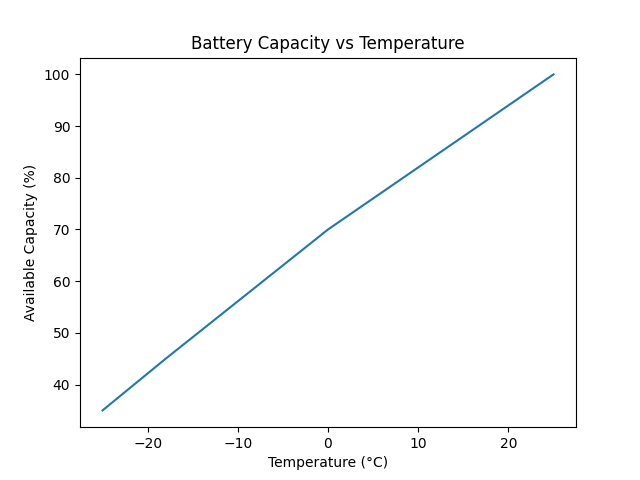
Ambientes com temperaturas muito baixas (por exemplo, −18 °C / 0 °F)
Impacto científico:
As reações químicas abrandam drasticamente.
A capacidade útil poderá descer para cerca de 501 TP3T.
A resistência interna aumenta.
Padrão de sintomas:
Sinais de alerta ligeiros podem transformar-se numa emergência da noite para o dia.
Uma bateria que ontem demorou um pouco mais a arrancar pode nem sequer arrancar hoje.
Recomendação:
Opte por baterias com uma classificação CCA mais elevada em regiões frias.
Viagens curtas de longa duração (<20 minutos)
Mecanismo:
Carregamento durante a condução < energia consumida durante o arranque + acessórios.
A bateria permanece num estado de carga parcial crónico.
Isto acelera cristalização do sulfato de chumbo (sulfatação), reduzindo permanentemente a capacidade.
Padrão de sintomas:
Os sintomas da fase intermédia podem surgir após apenas 1 a 2 anos.
Recomendação:
Utilize mensalmente um carregador inteligente externo para realizar uma carga completa.
Sistemas de arranque e paragem automáticos frequentes
Requisitos para veículos com sistema start-stop:
Centenas de ciclos de descarga de alta corrente
Ciclos de recarga rápida
As pilhas normais não aguentam esta carga.
Se utilizar uma bateria normal num automóvel com sistema start-stop:
A avaria pode ocorrer dentro de alguns meses.
Solução correta:
Utilize baterias AGM ou EFB especificamente concebidas para condições de utilização intensiva.
4. Métodos de ensaio profissionais e limites científicos
É aqui que a maioria dos guias online fica aquém.
É necessário:
Multímetro digital
Testador de baterias (de preferência, um testador de resistência interna)
Passo 1: Tensão em repouso (após mais de 2 horas com o motor desligado)
| Tensão | Interpretação |
|---|---|
| 12,6 V+ | Saudável (~100%) |
| 12,4 V | Aceitável (~75%) |
| 12,2 V ou menos | Fraco (<50%), são necessários mais testes |
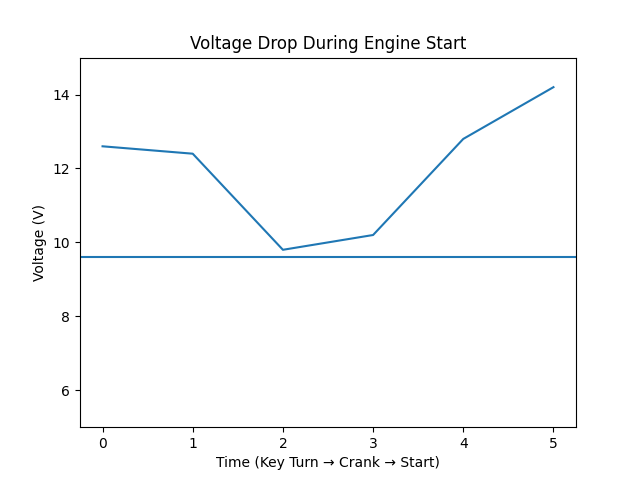
Passo 2: Tensão de arranque (teste crítico)
Ligue o multímetro aos terminais e ligue o motor.
Bateria em bom estado:
A tensão diminui, mas mantém-se ≥9,6 V
Bateria com defeito:
Desce abaixo dos 9 V (por vezes até aos 6 V)
Isto confirma a incapacidade de fornecer corrente elevada.
Passo 3: Teste do sistema de carga (com o motor a funcionar)
Com o motor em marcha lenta, ligue os faróis e o ar condicionado.
Normal:
13,5–14,8 V
Abaixo de 13 V:
O alternador não está a carregar corretamente
Acima de 15 V:
Avaria no regulador de tensão → sobrecarga → risco de inchaço da bateria
Passo 4: Teste de resistência interna / condutância (o mais preciso)
O testador de baterias compara a resistência interna medida com o CCA nominal.
Norma de substituição:
Saúde abaixo de 50%
Resistência interna significativamente superior à de uma bateria nova equivalente
5. Sistema de manutenção preventiva — Criar um calendário de estado da bateria
Em vez de ficar à espera que algo corra mal, siga esta estrutura:
Hábitos semanais / diários
Respeite a hora de início.
Evite utilizar acessórios durante muito tempo com o motor desligado.
Após uma longa viagem, deixe o motor a funcionar em ponto morto durante alguns instantes antes de desligá-lo.
Verificação mensal / trimestral
Verifique se os terminais apresentam sinais de corrosão.
Certifique-se de que a caixa está limpa e seca.
Meça a tensão em repouso (de preferência ≥12,4 V).
A cada 6 meses / Antes do inverno
Realizar o teste da tensão de arranque.
Realizar o teste do sistema de carga.
Utilize um carregador inteligente para uma carga completa (especialmente em veículos utilizados em viagens curtas).
6. Árvore de decisão para ação imediata
Substitua imediatamente se:
Surge qualquer sintoma de emergência.
Sintoma de fase intermédia + tensão em repouso <12,2 V.
Sintoma de fase intermédia + tensão de arranque <9,6 V.
Considere seriamente a substituição se:
Sinais de alerta precoce + bateria com mais de 3 anos.
Saúde <60% no teste de condutância.
Planeamento preventivo:
Sem sintomas, mas a bateria tem 4–5 anos → marque uma revisão antes do inverno.
Conclusão final
Uma bateria de carro em mau estado não se define apenas pela idade.
É definido por:
Estabilidade da tensão
Capacidade atual de entrega
Resistência interna
Ambiente de utilização
Estado do sistema de carregamento
A maioria das avarias poderia ser prevista com meses de antecedência através de medições simples.
A verdadeira competência não reside em reconhecer um sintoma, mas sim em interpretá-lo corretamente.
Referências técnicas
Bandhauer, T. M., Garimella, S., & Fuller, T. F. (2011). Uma análise crítica das questões térmicas nas baterias de iões de lítio. Revista da Sociedade Eletroquímica, 158(3), R1–R25. https://doi.org/10.1149/1.3515880
Battery Council International. (2023). Manual de manutenção da bateria BCI e normas de substituição. https://batterycouncil.org
Burke, A. F., & Zhao, H. (2016). Sistemas de propulsão automóvel e tecnologias de baterias. SAE International. https://doi.org/10.4271/R-449
Linden, D., & Reddy, T. B. (2011). Manual de baterias (4.ª ed.). McGraw-Hill Education.
Pesaran, A. A. (2002). Modelos térmicos de baterias para simulações de veículos híbridos. Revista de Fontes de Energia, 110(2), 377–382. https://doi.org/10.1016/S0378-7753(02)00100-8
Sociedade de Engenheiros Automotivos (SAE). (2020). SAE J537 – Baterias de armazenamento. SAE International.
Sociedade de Engenheiros Automotivos (SAE). (2021). SAE J240 – Requisitos de desempenho de arranque a frio. SAE International.
Departamento de Energia dos EUA. (2022). Orientações sobre a manutenção e o desempenho da bateria do veículo. https://www.energy.gov
Perguntas frequentes (FAQ)
1. Quais são os primeiros sinais de que a bateria do carro está a falhar?
Os primeiros sinais de que a bateria do carro está a falhar incluem um tempo de arranque do motor ligeiramente mais longo, arranques a frio mais difíceis no inverno, luzes interiores mais fracas antes do arranque e piscadelas ocasionais do aviso de bateria no painel de instrumentos. Estes sintomas iniciais surgem frequentemente meses antes da avaria total.
2. Como posso saber se é a bateria do carro que está avariada ou se é o alternador?
Uma bateria com problemas costuma apresentar sintomas antes ou durante o arranque do motor. Um problema no alternador causa normalmente dificuldades durante a condução, tais como o escurecimento dos faróis em marcha lenta ou uma queda da tensão para menos de 13 V quando medida com um multímetro.
3. Que tensão indica que a bateria do carro está avariada?
12,6 V ou mais: Bom
12,4 V: Carga moderada
12,2 V ou menos: fraco/envelhecido
Menos de 9,6 V durante o arranque: bateria com defeito
Se a tensão de arranque descer abaixo dos 9,6 V, recomenda-se vivamente a substituição.
4. Por que é que o meu carro só faz um clique quando tento ligá-lo?
Um som de clique indica normalmente que a bateria não consegue fornecer corrente suficiente para acionar o motor de arranque. Se for possível dar a partida com a ajuda de outra bateria, isso confirma que o problema provavelmente está na bateria.
5. O tempo frio pode danificar a bateria do carro durante a noite?
Sim. A −18 °C (0 °F), uma bateria pode perder até 50% da sua capacidade disponível. Uma bateria fraca pode avariar-se repentinamente em climas frios.
6. Quanto tempo dura, normalmente, uma bateria de carro?
A maioria das baterias de automóvel tem uma duração de 3 a 5 anos. No entanto, viagens curtas, temperaturas extremas e uma condução com paragens e arranques frequentes podem reduzir significativamente a sua vida útil.
7. Uma bateria de carro inchada é perigosa?
Sim. Uma bateria inchada ou com fugas pode indicar sobrecarregamento ou curto-circuitos internos. Isso representa um risco para a segurança e deve ser substituída imediatamente.
8. As viagens curtas podem danificar a bateria do carro?
Sim. As viagens com duração inferior a 20 minutos podem não recarregar totalmente a bateria, causando uma recarga insuficiente crónica e danos por sulfatação.
9. Devo substituir a bateria antes do inverno?
Se a sua bateria tiver mais de 3 anos ou apresentar sinais precoces de desgaste, recomenda-se vivamente que a teste ou substitua antes do inverno.
10. Qual é a forma mais precisa de testar uma bateria de carro?
O método mais preciso consiste num teste de resistência interna (condutância) realizado com um analisador de baterias profissional. Este teste mede o desempenho real de arranque a frio e a percentagem de estado de saúde da bateria.
Explore a nossa gama de baterias de automóvel premium
Quando chega a altura de substituir, a Powsea oferece baterias automóveis OEM/ODM de alta qualidade. Diretamente da fábrica, com certificação ISO 9001.


 Portuguese
  English
  Spanish
  Arabic
  Russian