
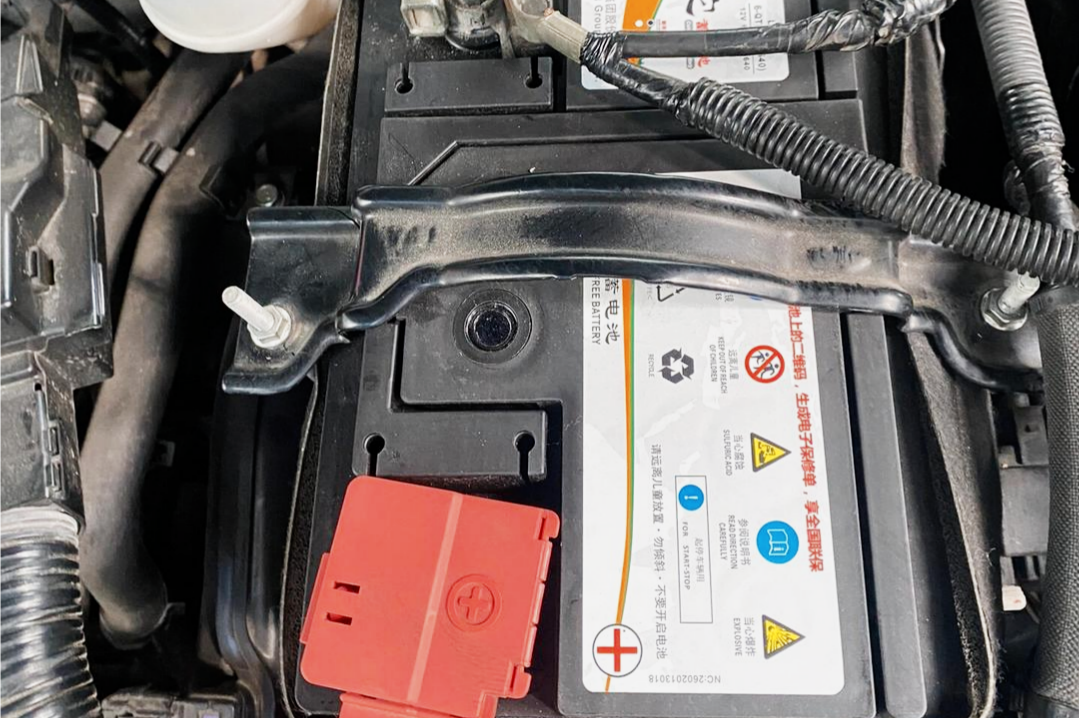
Signs of a Bad Car Battery — The Complete Diagnostic Guide (Not Just a Symptom List)
Most online articles about a bad car battery simply list symptoms: slow crank, dim lights, clicking sound, corrosion.
But here’s the problem:
👉 Not every electrical issue is a bad battery.
👉 Not every symptom has the same urgency.
👉 Environment and driving habits dramatically change how symptoms appear.
👉 Few guides explain how to scientifically confirm whether the battery is truly failing.
This guide goes beyond surface-level checklists. It teaches you how to diagnose correctly, classify symptoms by severity, and make data-driven replacement decisions.
1. The Most Critical Step: Differential Diagnosis
Is It Really the Battery — Or Another System?
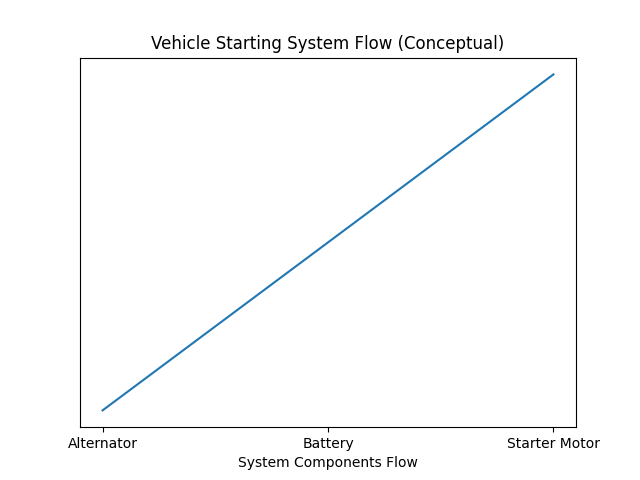
Before replacing anything, understand the system:
Battery = energy storage tank
Alternator = charger
Starter motor = high-current consumer
Wiring & grounds = pipelines
A problem can occur in any part of this chain.
Quick Diagnostic Philosophy
Battery problems usually appear when the engine is OFF or at the moment of starting.
If electrical issues continue after the engine is running, suspect the alternator or wiring first.
Symptom-Based Differential Diagnosis Table
| Symptom | Likely Battery Problem (How to Verify) | Possible Other Cause (How to Rule Out) |
|---|---|---|
| Slow or weak cranking | Battery cannot supply sustained high current. Test: turn on headlights or honk for several minutes (engine off), then try starting. If significantly worse → battery likely weak. | Starter motor failure: grinding or sharp friction sound. If battery tests healthy but symptom remains → suspect starter. |
| Clicking sound, no crank | Battery severely discharged; solenoid cannot engage fully. Jump-start works immediately → strong battery indication. | Starter solenoid failure: if starting voltage remains above 11V during crank attempt, but no crank → starter or wiring issue. |
| Lights dim while driving | Usually NOT battery’s primary fault once engine runs. | Alternator likely failing. Test running voltage at idle with load: 13.5–14.8V normal. <13V or >15V → charging system problem. |
| Battery case swollen or leaking | Physical battery damage due to overcharge, heat, or internal short. Replace immediately. | Overcharging alternator must also be checked. |
2. Symptom Severity Levels — From Warning to Emergency
Most articles fail to differentiate urgency. That’s dangerous.
⚠️ Early Warning Signs (Monitor Closely)
Cold start takes 0.5–1 second longer than usual (still starts once).
After 2 weeks unused, engine feels slightly weaker on start.
Battery indicator window color fades (if equipped).
Meaning:
Capacity is declining but still functional.
Action:
Avoid short trips.
Perform full slow charge with smart charger.
Plan professional testing within 1–3 months.
🚨 Mid-Stage Signs (High Failure Risk)
Requires multiple attempts to start.
After 10–15 minutes of using lights/radio while parked, restart becomes difficult.
Battery warning light flickers.
Slight swelling or warm terminals.
Meaning:
Battery can no longer meet normal demand reliably.
Action:
Perform professional diagnostic immediately.
Avoid remote areas or extreme weather.
Prepare for replacement.
🚑 Emergency Signs (Replace Immediately)
Only clicking sound; engine won’t turn.
Obvious bulging case, electrolyte leak, strong acid smell.
Battery light stays on while driving + lights dim rapidly.
Electronics reset or display random glitches.
Meaning:
Battery fully failed or unsafe (bulging may risk rupture).
Action:
Stop repeated start attempts. Tow or jump-start once and replace immediately.
3. Environment & Usage: Why Symptoms Appear Differently
This is one of the most overlooked factors online.
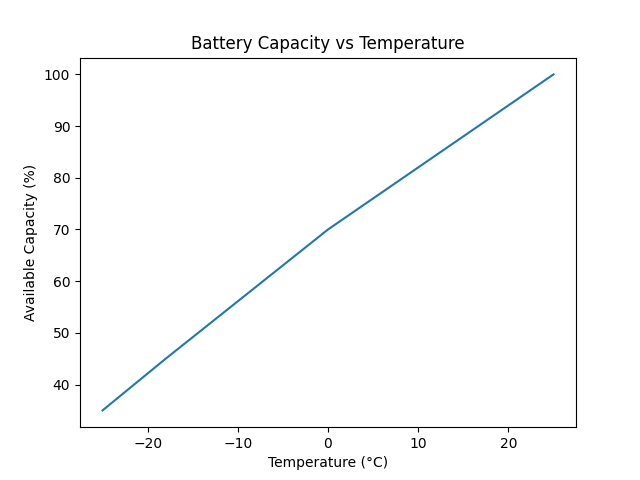
High Cold Environments (e.g., −18°C / 0°F)
Scientific Impact:
Chemical reactions slow dramatically.
Usable capacity may drop to ~50%.
Internal resistance increases.
Symptom Pattern:
Mild warning signs can turn into emergency overnight.
A battery that started slightly slower yesterday may not start at all today.
Recommendation:
Choose higher CCA-rated batteries in cold regions.
Long-Term Short Trips (<20 Minutes)
Mechanism:
Charging during driving < energy used during starting + accessories.
Battery remains in chronic partial state of charge.
This accelerates lead sulfate crystallization (sulfation), permanently reducing capacity.
Symptom Pattern:
Mid-stage symptoms may appear after only 1–2 years.
Recommendation:
Use external smart charger monthly to fully saturate charge.
Frequent Auto Start-Stop Systems
Start-stop vehicles demand:
Hundreds of high-current discharge cycles
Rapid recharge cycles
Normal batteries cannot handle this stress.
If using standard battery in start-stop car:
Failure may occur within months.
Correct Solution:
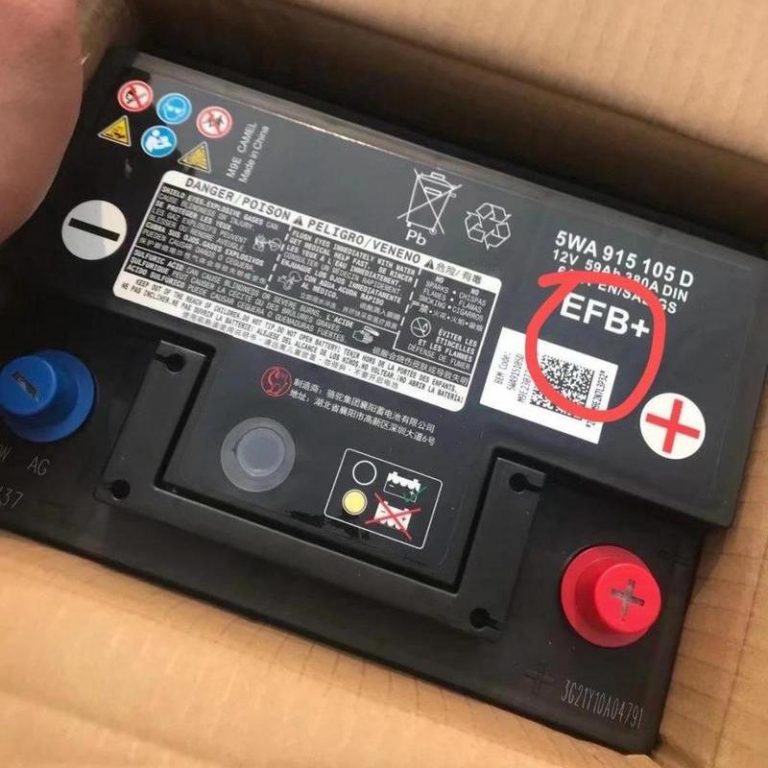
Use AGM or EFB batteries specifically designed for high-cycle stress.
4. Professional Testing Methods & Scientific Thresholds
This is where most online guides stop short.
You need:
Digital multimeter
Battery tester (internal resistance tester preferred)
Step 1: Resting Voltage (After 2+ Hours Engine Off)
| Voltage | Interpretation |
|---|---|
| 12.6V+ | Healthy (~100%) |
| 12.4V | Acceptable (~75%) |
| 12.2V or lower | Weak (<50%), further testing needed |
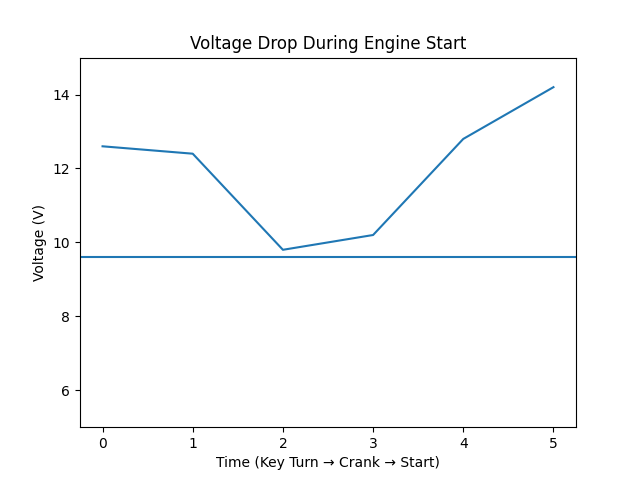
Step 2: Cranking Voltage (Critical Test)
Attach multimeter to terminals and start engine.
Healthy battery:
Voltage drops but remains ≥9.6V
Failing battery:
Drops below 9V (sometimes 6V)
This confirms inability to supply high current.
Step 3: Charging System Test (Engine Running)
At idle, turn on headlights + AC.
Normal:
13.5–14.8V
Below 13V:
Alternator not charging properly
Above 15V:
Voltage regulator failure → overcharging → battery swelling risk
Step 4: Internal Resistance / Conductance Test (Most Accurate)
Battery tester compares measured internal resistance to rated CCA.
Replacement standard:
Health below 50%
Internal resistance significantly higher than new equivalent battery
5. Preventive Maintenance System — Build a Battery Health Calendar
Instead of waiting for failure, follow this structure:
Weekly / Daily Habits
Observe start time consistency.
Avoid long accessory use with engine off.
After long drive, idle briefly before shutdown.
Monthly / Quarterly Check
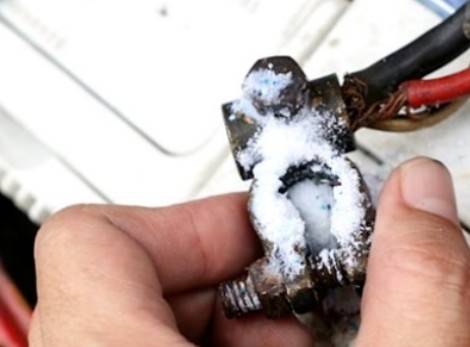
Inspect terminals for corrosion.
Ensure case clean and dry.
Measure resting voltage (≥12.4V preferred).
Every 6 Months / Before Winter
Perform cranking voltage test.
Perform charging system test.
Use smart charger for full saturation charge (especially short-trip vehicles).
6. Immediate Action Decision Tree
Replace immediately if:
Any emergency symptom occurs.
Mid-stage symptom + resting voltage <12.2V.
Mid-stage symptom + cranking voltage <9.6V.
Strongly consider replacement if:
Early warning symptoms + battery older than 3 years.
Health <60% on conductance test.
Preventive planning:
No symptoms but battery 4–5 years old → schedule testing before winter.
Final Takeaway
A bad car battery is not defined by age alone.
It is defined by:
Voltage stability
Current delivery capacity
Internal resistance
Usage environment
Charging system health
Most failures could be predicted months in advance with simple measurements.
The real expertise lies not in recognizing a symptom — but in correctly interpreting it.
Technical References
Bandhauer, T. M., Garimella, S., & Fuller, T. F. (2011). A critical review of thermal issues in lithium-ion batteries. Journal of The Electrochemical Society, 158(3), R1–R25. https://doi.org/10.1149/1.3515880
Battery Council International. (2023). BCI battery service manual and replacement standards. https://batterycouncil.org
Burke, A. F., & Zhao, H. (2016). Automotive power systems and battery technologies. SAE International. https://doi.org/10.4271/R-449
Linden, D., & Reddy, T. B. (2011). Handbook of batteries (4th ed.). McGraw-Hill Education.
Pesaran, A. A. (2002). Battery thermal models for hybrid vehicle simulations. Journal of Power Sources, 110(2), 377–382. https://doi.org/10.1016/S0378-7753(02)00100-8
Society of Automotive Engineers (SAE). (2020). SAE J537 – Storage batteries. SAE International.
Society of Automotive Engineers (SAE). (2021). SAE J240 – Cold cranking performance requirements. SAE International.
U.S. Department of Energy. (2022). Vehicle battery maintenance and performance guidelines. https://www.energy.gov
Frequently Asked Questions (FAQ)
1. What are the first signs of a bad car battery?
The earliest signs of a failing car battery include slightly longer engine cranking time, weaker cold starts in winter, dim interior lights before startup, and occasional dashboard battery warning flickers. These early symptoms often appear months before total failure.
2. How can I tell if my car battery is bad or if it’s the alternator?
A bad battery usually shows symptoms before or during engine startup. An alternator problem typically causes issues while driving, such as headlights dimming at idle or voltage dropping below 13V when measured with a multimeter.
3. What voltage indicates a bad car battery?
12.6V or above: Healthy
12.4V: Moderate charge
12.2V or below: Weak/aging
Below 9.6V during startup: Failing battery
If startup voltage drops under 9.6V, replacement is strongly recommended.
4. Why does my car only click when I try to start it?
A clicking sound usually indicates the battery cannot supply enough current to engage the starter motor. Jump-starting successfully confirms the battery is likely the issue.
5. Can cold weather ruin a car battery overnight?
Yes. At −18°C (0°F), a battery can lose up to 50% of its available capacity. A weak battery may fail suddenly in cold climates.
6. How long does a typical car battery last?
Most car batteries last 3–5 years. However, short trips, extreme temperatures, and frequent start-stop driving can shorten lifespan significantly.
7. Is a swollen car battery dangerous?
Yes. A swollen or leaking battery may indicate overcharging or internal short circuits. It poses a safety risk and should be replaced immediately.
8. Can short drives damage a car battery?
Yes. Trips shorter than 20 minutes may not fully recharge the battery, causing chronic undercharging and sulfation damage.
9. Should I replace my battery before winter?
If your battery is over 3 years old or shows early warning signs, testing or replacing before winter is strongly recommended.
10. What is the most accurate way to test a car battery?
The most accurate method is an internal resistance (conductance) test using a professional battery analyzer. It measures real cold cranking performance and battery health percentage.
Browse Our Premium Car Batteries
When it’s time to replace, Powsea offers high-quality OEM/ODM automotive batteries. Factory direct, ISO9001 certified.

 English
  Spanish
  Arabic
  Russian
  Portuguese